I'm honestly still not entirely sure whether I used elephant apple or wood apple. The entire thing started because I had this delicious soup I had eaten when on holiday in Assam. The ingredients listed elephant apple and a bunch of spices but not all. It was tangy, peppery, garlicky, warming, and somehow felt medicinal without tasting like medicine.
Also, my throat was bad. Which, frankly, is how a lot of these recipes begin.
I remembered there being curry leaves. Definitely pepper. Ginger. Garlic. Some kind of sour fruit. Maybe tamarind. I remember thinking at the time that it tasted like rasam, but lighter and stranger and less tomato-y.
Anyway. My mum surprised me by bringing home this fruit which I'm still not entirely convinced was elephant apple. Halfway through cooking I started suspecting it might actually be wood apple because once cut open it smelled faintly like puke. Not aggressively. But enough that I had a moment of: "Why am I voluntarily cooking this?"
And yet, once simmered, it transformed completely. The first version of the broth actually tasted really balanced. Warm. Peppery. Gingery. Then I accidentally added too much tamarind because I got overexcited chasing the sourness. Suddenly the whole thing tilted sharp and the ginger-garlic disappeared into the background. Then I balanced it back with salt, ginger, and garlic like some kind of panicked kitchen alchemist.
Then I forgot the tadka. Then I added the tadka later and suddenly understood why people say tempering "blooms" flavour because the entire soup woke up instantly. The sourness popped. The pepper moved to the front of the palate. My lips started tingling slightly from the pepper and pippali.
Honestly, the final thing tasted like if rasam disappeared to Northeast India for a while and came back changed. I still don't fully know whether this was elephant apple or wood apple. My mother handed me the fruit with complete confidence. I accepted this confidence without verification. Somewhere during the cooking process, that confidence began to collapse. And despite all the chaos, the soup was genuinely comforting.
Ingredients
- 2–3 slices elephant apple or wood apple
- Small marble-sized tamarind, soaked in warm water
- 4–5 cloves garlic, smashed
- 1 inch ginger, crushed
- 1–2 green chillies, slit
- 2–3 coriander stems, lightly bruised
- 2–3 cups water
- Salt, to taste
- Crushed spice mix: 1 tsp black peppercorns, ¼ tsp cumin seeds, ¼ tsp coriander seeds, 1 dried red chilli, ¼–½ Javanese long pepper
- Tempering: 1 tbsp mustard oil, ½ tsp mustard seeds, 8–10 curry leaves, pinch hing
Method
- Crush the garlic, ginger and dried chillies roughly in a mortar and pestle — you want flavour released, not a paste.
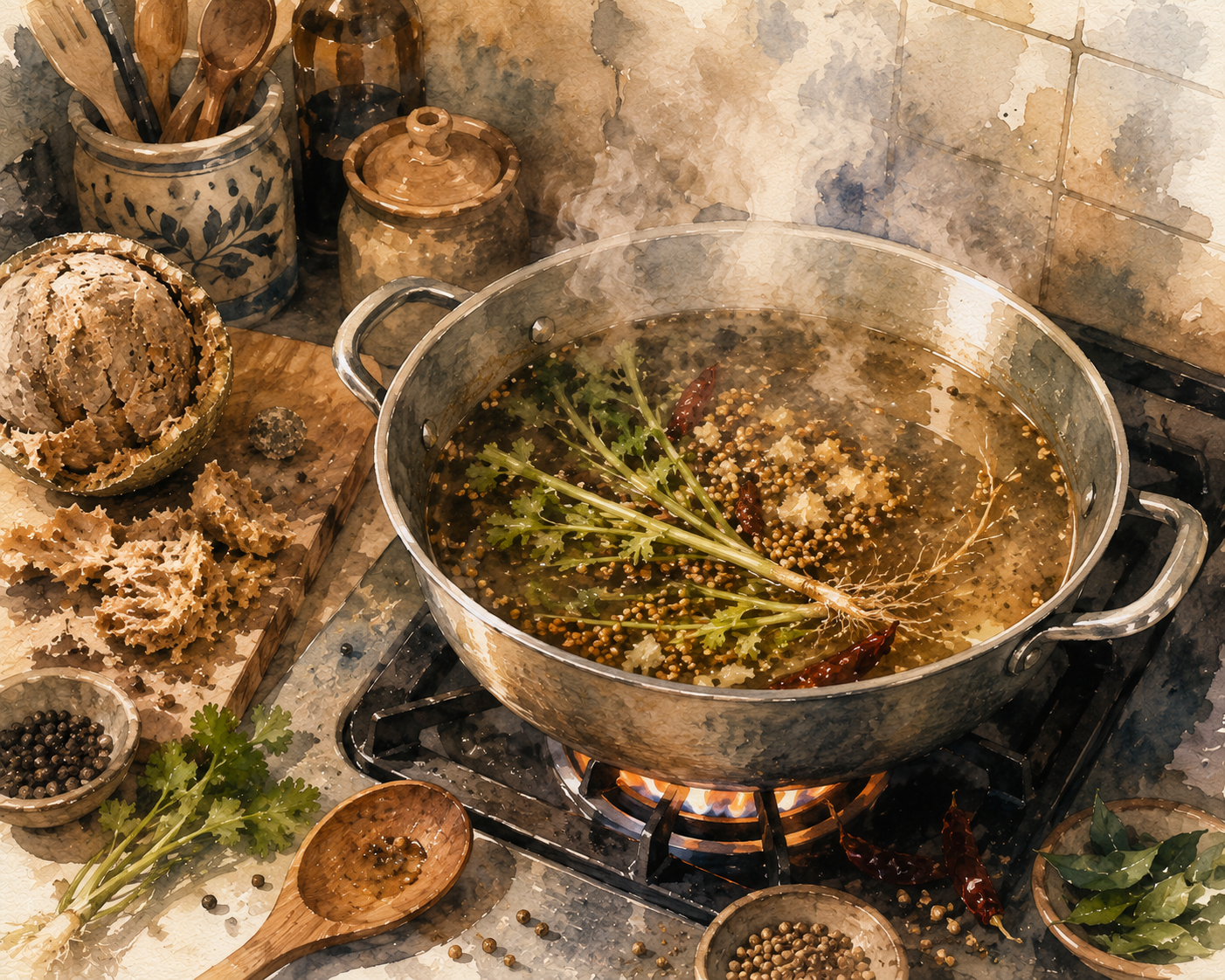
- Add this into a pot along with the coriander stems and roots, crushed spices, and water. Bring everything to a boil, then lower the heat and let it simmer gently.
- Add the elephant apple or wood apple and continue simmering for about 12–15 minutes. The broth should become lightly brown, aromatic and peppery.
- Soak the tamarind in a little warm water for 5–10 minutes, then strain out the fibres and seeds. Add the tamarind liquid slowly into the soup while tasting as you go — don't overdo it because the tadka sharpens the sourness later.
- Add salt and taste. At this stage the soup should feel warm, peppery, tangy and soothing.
- Strain the broth completely. This step matters more than I expected — it transforms the soup into something much cleaner and more comforting.
- Heat the mustard oil in a small pan until properly hot. Add the mustard seeds and curry leaves and let everything crackle for about 30 seconds before pouring immediately into the soup.
- Bring the soup back to a very gentle simmer for another minute, then drink warm.
Freeze leftover elephant apple or wood apple in double bags. Your freezer will survive.
Do not powder the spices fully or the broth becomes muddy.
If the soup becomes too sour: add hot water, more ginger, more garlic, salt.
If the ginger disappears after tadka: add a little freshly crushed ginger at the end next time.
I used dried teja chillies instead of fresh green chilli, cold-pressed yellow mustard oil, and coriander stems and roots because Singapore supermarkets often sell them attached anyway.
If you cannot find elephant apple or wood apple, you could probably make a version using tamarind, tomato, black pepper, and pippali. It would lean much more rasam, but probably still be delicious.
This is essentially an extraction broth. The garlic, ginger, pepper, coriander seed and cumin are not supposed to become a thick blended soup — they infuse the liquid gently, which keeps the broth clear, light, and drinkable.
The sourness comes from two places: the fruit itself and tamarind. But the tamarind needs restraint because the mustard oil tadka sharpens and amplifies sourness dramatically once added.
Straining the broth keeps it soothing and easier on a sore throat. The tadka is what makes the whole thing wake up.
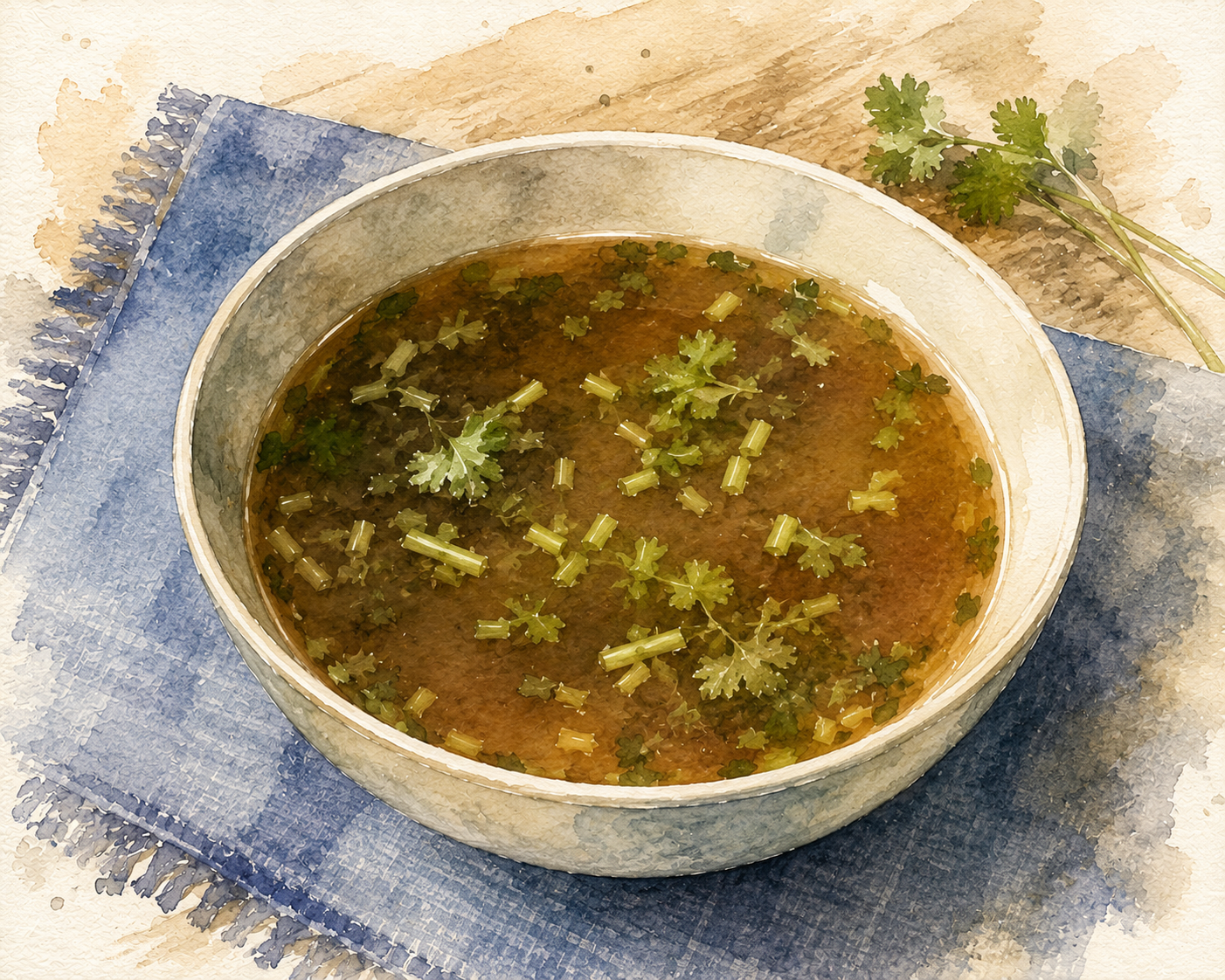
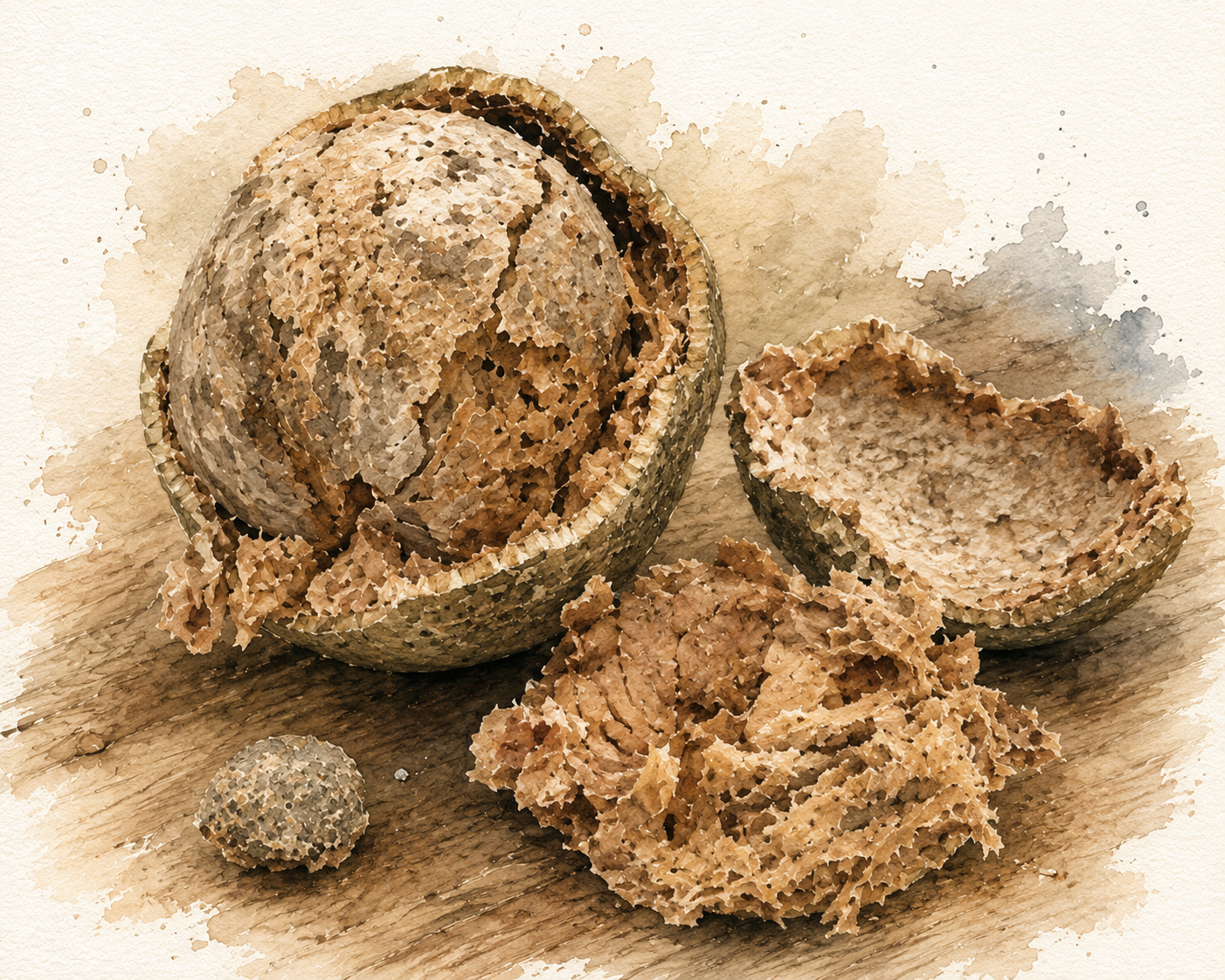
Standing in the kitchen while trying to decide whether the fruit smelled disgusting or fascinating. Then slowly sipping it direct from the pot and realising my mucus was loosening almost immediately after the tadka went in. Which honestly felt vaguely magical.
Use less tamarind. Let the fruit do more of the souring. Maybe add a tiny bit of fresh crushed ginger after straining.
Possibly make it with fish next time because I think the broth wants protein. Still undecided about whether the fruit smells unbearable or intriguing. Also still not entirely sure whether I used elephant apple or wood apple.
New recipes in your inbox
Subscribe and I'll let you know when a new recipe goes up.